Cross Stitching Icon: A Seasonal Embroidery Designer’s Review
First Impression: Festive, Clean, and Instantly Recognizable
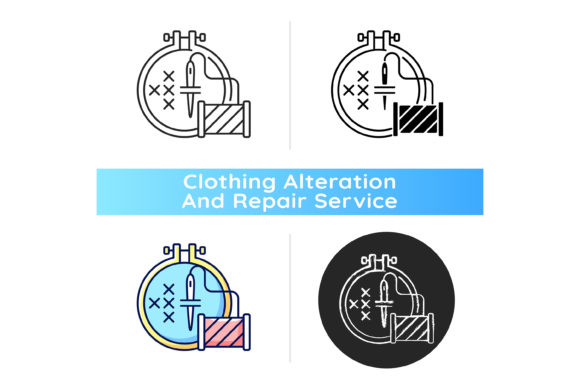
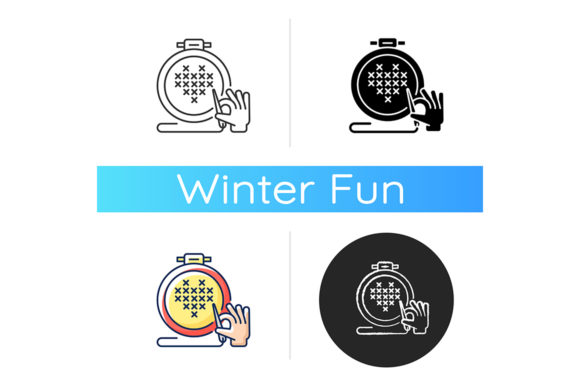
As an embroidery designer who’s built six holiday collections for Etsy sellers and small-batch apparel brands, my first glance at Cross Stitching Icon told me everything I needed to know: this isn’t just another clipart-style graphic—it’s a thoughtful, seasonally grounded icon with quiet confidence. The linear black style delivers crisp clarity at any scale, while the RGB color variants offer warm, balanced palettes ideal for Christmas reds, forest greens, creamy ivories, and soft golds. It feels cozy *and* modern—nostalgic enough for handmade gift shoppers, clean enough for premium home decor lines. There’s no clutter, no over-rendered detail—just elegant simplicity that reads instantly as “cross stitch,” even at thumbnail size. That emotional shorthand matters deeply during holiday shopping, when customers scroll fast and decide in seconds.
Where It Shines: Real-World Holiday Product Applications
Cross Stitching Icon is unusually versatile across high-demand seasonal categories. On sweatshirt embroidery, its bold line weight holds up beautifully—even on textured fleece—without needing excessive underlay or density adjustments. For tote bag design, it scales cleanly from 3” to 8”, making it perfect for matching family sets or boutique gift bundles. Kitchen towel embroidery benefits from its balanced negative space: it won’t overwhelm linen or cotton terry, and the icon’s symmetry reads well whether stitched vertically or horizontally near a hem. As a pillow cover motif or embroidered patch, it adds crafty charm without sacrificing polish—ideal for Etsy listings where “handmade aesthetic” meets “shop-ready finish.” And yes—it works brilliantly as a festive ornament base: pair it with subtle metallic thread accents or backstitch outlines to elevate DIY kits and craft fair displays.
Boosting Giftability & Customer Trust
Holiday buyers don’t just purchase products—they buy meaning, memory, and mood. Cross Stitching Icon taps directly into the emotional resonance of slow craft, tradition, and intentional making. When used on personalized gifts (like baby onesies with names + icon) or limited edition apparel, it signals care and authenticity—not mass production. That builds trust, especially among repeat Etsy shoppers who value cohesive brand storytelling. In social media previews and printable mockups, its clean vector foundation ensures sharp renders across Instagram carousels, Pinterest pins, and email banners. Because it’s isolated and scalable, it integrates seamlessly into broader seasonal collections—say, alongside snowflake motifs or vintage-style typography—strengthening visual recognition and brand consistency across your shop.
Use With Intention: Where Caution Applies
While Cross Stitching Icon is highly adaptable, its linear precision demands mindful application. Avoid using it in tiny hoop sizes (under 2.5”) unless you’ve verified stitch density—fine details may collapse or blur on dense fabrics like thick towels or heavy canvas. On dark fabric, test thread colors thoroughly: RGB variants assume standard white/light background contrast; deep navy or charcoal may mute subtler tones. Metallic thread can lift or snag on tight corners—stick to satin or matte polyester for reliability. Also, avoid curved surfaces like baseball caps unless the design has been digitized specifically for that shape; flat vector art doesn’t auto-adapt to 3D curvature. Stretchy garments (e.g., ribbed knit baby bodysuits) require extra stabilizer and reduced tension—review small details after stitching to ensure legibility. Finally, always confirm commercial licensing before selling finished seasonal products—this is essential for small shop product integrity.
Practical Designer Notes for Holiday Production
- Test thread colors on both light and dark fabric—especially if offering multiple versions in your Etsy shop.
- Check stitch density against your machine’s capabilities and your target fabric texture—high-density fills aren’t needed for linear icons, but undershoot too far and you’ll lose definition.
- Confirm hoop size compatibility early—some ZIP file packages include multiple sizes; choose the one that aligns with your most-used hoops (e.g., 4x4” for ornaments, 5x7” for pillow covers).
- Use proper stabilizer: tear-away for stable wovens (linen, cotton), cut-away for knits or stretchy items.
- Create realistic mockups—not just digital renders, but actual stitched samples on your intended fabrics—to assess scale, texture interaction, and holiday warmth.
- Review small details after stitching: check corner sharpness, line continuity, and thread coverage—especially important for gifting where finish quality equals perceived value.
- Plan matching color palettes across your collection—use the RGB variants as a starting point, then extend into coordinating thread families (e.g., DMC 310 + 742 + 3860 for classic Christmas).
- Verify commercial licensing before listing finished products—this protects your small business and honors the original creator’s terms.
Final Thought: A Quiet Anchor in Your Holiday Lineup
In a market flooded with busy, trend-chasing graphics, Cross Stitching Icon stands out by doing less—and doing it with intention. It’s not flashy, but it’s memorable. Not loud, but it carries weight. For embroidery sellers building holiday collections around authenticity, craftsmanship, and emotional connection, this icon functions as both a visual anchor and a flexible workhorse. Whether stitched on a linen apron for a baking kit, embroidered onto a keepsake ornament box, or scaled large for a statement pillow cover, it reinforces what your customers truly seek: handmade meaning, seasonal warmth, and quiet confidence in every stitch. As a seasoned designer, I don’t add icons to my seasonal lineup lightly—and Cross Stitching Icon earned its place.