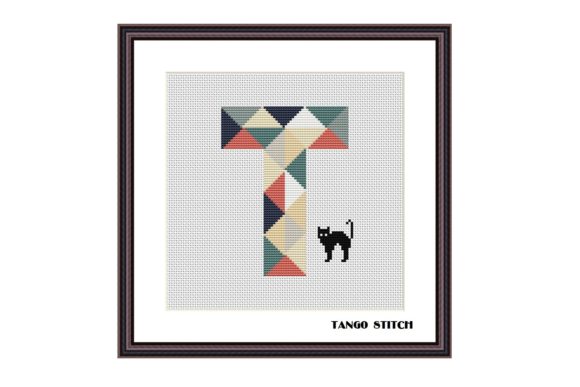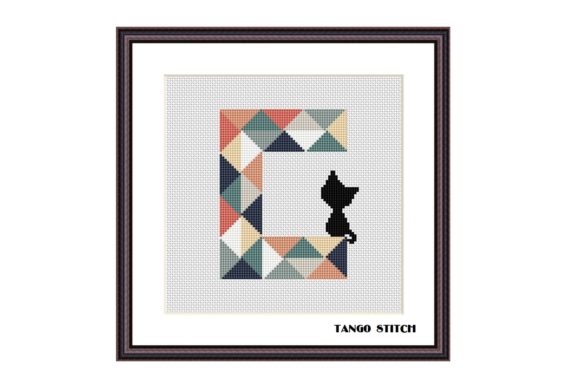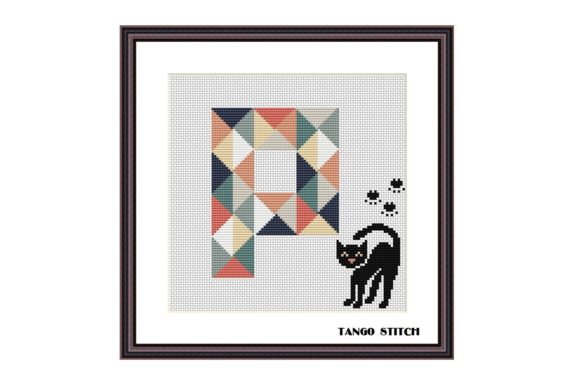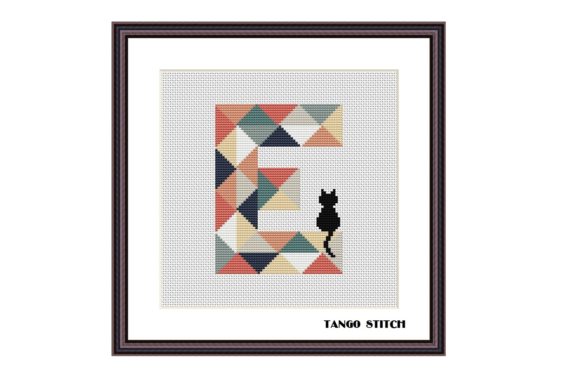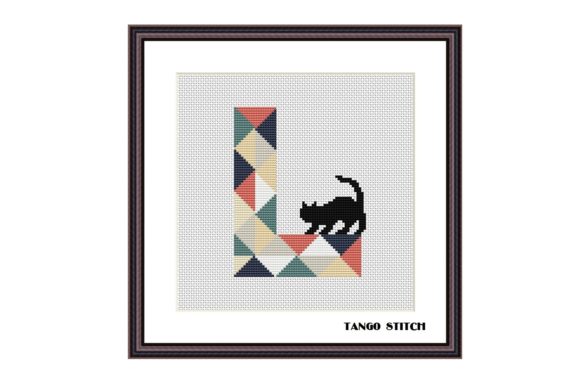
Letter L and Curious Cat Cross Stitch
A Designer’s First Glance: Whimsy with Quiet Confidence
When Letter L and Curious Cat Cross Stitch landed on my screen, I didn’t see just another animal-typography hybrid—I saw a quiet moment of charm. The black cat leans in, ears perked, one paw lifted mid-curious step, its silhouette soft but intentional beside the clean, upright “L.” There’s no fussy detail, no overworked shading—just full stitches carrying weight through shape and placement. It feels like something you’d stitch for a friend’s baby nursery, not a trend-chasing Etsy listing. That’s its first strength: it doesn’t shout. It invites.
Where This Design Naturally Lives (and Thrives)
I recently tested Letter L and Curious Cat Cross Stitch as a focal point on a natural linen tea towel—no border, no framing, just centered 4 inches from the top hem. It worked beautifully: the cat’s roundness softened the towel’s texture, and the “L” grounded the composition without stiffness. That same layout translated cleanly to a cotton canvas tote bag (medium-weight, unlined), where the design sat comfortably above the side seam—not too high, not too low—and held visual balance even when the bag was slung over a shoulder.
It also shined as a baby onesie embroidery project: small enough to avoid bulk, expressive enough to read at a glance, and gentle enough in tone for gender-neutral gifting. For boutique owners or Etsy sellers, this is low-risk, high-charm inventory—it fits seamlessly into curated collections of nursery decor, handmade kitchen goods, or personalized children’s accessories. As a sweatshirt embroidery option? Yes—but only on structured, medium-to-heavy fleece. The simplicity of the design avoids the “flatness” that plagues overly minimal machine embroidery files on stretchy knits.
Where Caution Is Warranted
This isn’t a design for every surface—or every customer expectation. On thin or loosely woven fabric (like lightweight rayon challis or delicate muslin), the open negative space around the cat’s head and the “L”’s vertical stroke can feel fragile. Without proper stabilizer, those areas may pucker or shift during stitching, especially if using a dense thread count. Likewise, curved surfaces—caps, beanies, or curved pillow edges—require careful hooping and possibly slight design repositioning; the cat’s left ear and the “L”’s base don’t bend gracefully.
Dark fabric demands attention too. Since the pattern uses only full stitches (no backstitch outlines or satin-stitch definition), contrast relies entirely on thread color choice. A charcoal gray thread on navy fabric will disappear. Always test your thread colors on scrap fabric under real lighting—not just screen preview. And while it’s labeled “suitable for beginners,” that applies best to hand cross stitchers. For machine embroidery, treat it as a graphics-based cross stitch interpretation: confirm whether your software handles full-stitch-only layouts smoothly before scaling or digitizing further.
What It Adds to Your Finished Product
Letter L and Curious Cat Cross Stitch elevates perceived value without demanding premium labor. Its clarity reads well in photos—critical for Etsy sellers using printable mockups—and its warmth builds trust: customers sense intention, not algorithmic cuteness. When stitched cleanly on a linen apron or baby blanket, it signals care, not craft-store filler. That translates directly to repeat buyers, better reviews, and stronger brand consistency across handmade product lines.
It’s also gift-ready by nature. No need for embellishment or framing—the design carries its own narrative. A new parent receives it on a burp cloth and smiles because it feels personal, not mass-produced. That emotional resonance is hard to replicate with generic clip art or overused applique designs.
Practical Notes Every Embroidery Designer Should Run Through
- Test first on scrap fabric—especially if pairing with textured weaves or dark backgrounds.
- Review stitch density visually: look for tight clusters near the cat’s eye or the “L”’s serif—if they’re too dense, adjust thread tension or consider light fill stitch alternatives for machine use.
- Confirm hoop size compatibility before prepping production runs. Even simple graphics need breathing room.
- Inspect small details at actual stitch scale: the cat’s whiskers are implied, not drawn—make sure they read as intentional, not accidental gaps.
- Check black-and-white mockups to verify legibility without color crutches.
- Compare performance on light vs. dark fabric—not just for contrast, but for how shadows fall across the cat’s curve.
- Use tear-away or cut-away stabilizer for structured items like tote bags or patches; lightweight iron-on works for baby clothes.
- Verify licensing terms before selling finished items commercially—or listing the digital embroidery file itself. Graphics-based cross stitch patterns often carry different usage rights than standard machine embroidery files.
Final Thought: A Design That Serves, Not Just Decorates
Letter L and Curious Cat Cross Stitch isn’t flashy. It won’t dominate a tradeshow booth or trend on Pinterest for months. But it’s the kind of design that earns quiet loyalty—stitched onto a child’s first backpack, framed in a teacher’s classroom, or stitched inside a custom apron for a local bakery. It works because it respects the craft: no hidden complexity, no compromised readability, no forced quirkiness. For designers building a portfolio of reliable, emotionally resonant Cross Stitch Patterns, or for creative entrepreneurs curating thoughtful Graphics for their shop, this is the kind of asset that compounds value over time—not with volume, but with integrity.