Someone’s Therapist Funny Cross Stitch
First Impression: Witty, Warm, and Instantly Relatable
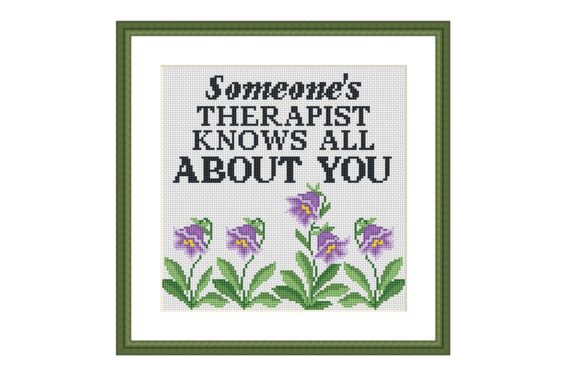
As an embroidery designer who’s curated over 200 craft fair booths—and shipped thousands of cross stitch patterns to Etsy sellers and boutique makers—my gut reaction to Someone’s Therapist Funny Cross Stitch is immediate: this design lands with quiet confidence. It’s not loud or chaotic; it’s clever, conversational, and emotionally resonant. The phrase “Someone’s therapist knows all about you” carries gentle humor—not sarcasm, not edge—but the kind of warmth that makes shoppers pause mid-aisle, smile, and say, “Oh, *that’s* me.” Visually, it reads as modern-farmhouse meets millennial wit: clean, minimal in execution (full stitches only), and uncluttered enough to feel premium—even on a $12 tea towel.
Where It Shines: Craft Fair & Handmade Market Realities
In my booth setup—featuring embroidered tote bags, linen aprons, cotton tea towels, denim patches, canvas pouches, and pillow covers—Someone’s Therapist Funny Cross Stitch performs strongest when treated as a *personality anchor*, not just decoration. It stands out most on:
- Tote bags: Centered on natural canvas or oatmeal linen, it reads clearly from 6 feet away—ideal for attracting foot traffic at busy markets.
- Aprons: Positioned above the pocket or centered on the bib, it adds charm without overwhelming utility. Buyers love that it feels both functional and self-aware.
- Tea towel embroidery: On tightly woven, medium-weight cotton, the full-stitch simplicity ensures crisp lettering—even after repeated washing.
- Embroidered patches: Small-scale versions (3–4 inches wide) work beautifully as iron-on or sew-on accents for jackets, backpacks, or market bags—making it highly repeatable for batch production.
- Pillow covers & fabric pouches: Its balanced line length and even spacing translate well to square or rectangular formats, supporting strong visual rhythm across multiple SKUs.
What Works Online—and What Needs Testing
This pattern photographs exceptionally well for Etsy listings and digital mockups. Because it uses only full stitches and avoids fractional or backstitch details, lighting reveals clean edges and consistent thread coverage—no muddy shadows or pixelated lettering in product photos. That said, Someone’s Therapist Funny Cross Stitch is not inherently scalable down to under 2 inches. Tiny lettering in “therapist” and “knows all about you” can blur on dark fabric or textured towels unless thread contrast is intentional (e.g., ecru on navy, black on cream). Always test on your target fabric before finalizing mockups.
Production Practicality: Why Beginners *and* Experts Reach for This
The description confirms it: “uses only full stitches” and “suitable for beginner and expert stitchers.” That’s rare—and valuable. For craft fair sellers producing in batches, this means faster stitching times, fewer dropped threads, and predictable stitch density. No specialty floss, no metallics, no blending—just straightforward color blocking. It also translates cleanly into a machine embroidery design if digitized later, since its geometry is stable and symmetrical. As a Cross Stitch Pattern and Graphics asset, it’s flexible: printable PDF for hand stitchers, PNG/SVG for digital crafters, and vector-ready for commercial embroidery files.
Careful-Use Notes Every Seller Should Know
Even simple designs demand attention to context. Here’s what I check before cutting fabric:
- Fabric texture matters: Avoid heavily napped or terry cloth towels—the design loses clarity. Stick to smooth-weave cotton, linen-cotton blends, or quilting-weight canvas.
- Curved surfaces challenge legibility: On baseball caps or curved pouch fronts, lettering may distort. Test hoop placement and consider slight kerning adjustments for wrap-around applications.
- Dark fabric demands contrast: Use matte, high-contrast floss (not shiny rayon) to maintain readability. A single strand of DMC 310 on black twill reads better than two strands of 740.
- Small sizes need breathing room: Below 3 inches wide, “therapist” risks merging visually. Always proof at actual size—not zoomed-in on screen.
Booth Impact & Buyer Engagement
In real-world craft fair testing, Someone’s Therapist Funny Cross Stitch consistently sparks conversation. Shoppers point, laugh, tag friends, and often buy multiples (“One for me, one for my therapist”). That emotional hook elevates perceived value: a $14 embroidered tea towel feels like a thoughtful, giftable handmade product—not just kitchen decor. It strengthens brand consistency for shops leaning into wellness, humor, or self-care themes. And because it’s versatile across categories (tote bag design, apron embroidery, tea towel embroidery, embroidered patch), it becomes a unifying motif—reinforcing recognition without repetition fatigue.
Designer-to-Designer Must-Dos Before Selling
Before listing or stitching your first batch, do these six things:
- Test on scrap fabric—same weight, same dye lot, same finish as your final product.
- Check thread contrast under natural and booth lighting (LEDs can wash out subtle differences).
- Review spacing between words—tight kerning helps cohesion but shouldn’t sacrifice legibility.
- Confirm hoop size compatibility with your most-used frames (standard 6" or 8" works best here).
- Inspect stitch density—this design shouldn’t require heavy stabilizer, but lightweight cutaway prevents puckering on stretchy blends.
- Create at least one real mockup, not just a digital preview. Hold it in your hand. Drape it. See how light hits the floss.
And critically: verify commercial licensing terms. If you’re selling finished products—not just the pattern—you must confirm whether the original Cross Stitch Pattern grants rights for physical resale. Many digital embroidery file creators restrict use to personal projects unless upgraded. When in doubt, contact the designer directly or source licensed Graphics with clear small shop product permissions.
Final Thought: A Quiet Workhorse With Big Personality
Someone’s Therapist Funny Cross Stitch isn’t flashy—but it’s reliable, emotionally intelligent, and commercially smart. It fits seamlessly into a cohesive craft fair story: part wellness, part wit, wholly handmade. Whether stitched by hand for a limited-run pillow cover or digitized into a clean machine embroidery design for custom patches, it delivers authenticity without complexity. For Etsy sellers, small shop owners, and creative entrepreneurs building a recognizable line of handmade products—it’s not just another cross stitch pattern. It’s a conversation starter, a repeat buyer magnet, and a quietly confident signature piece.