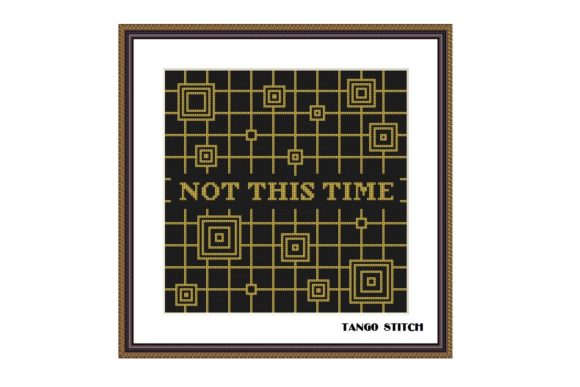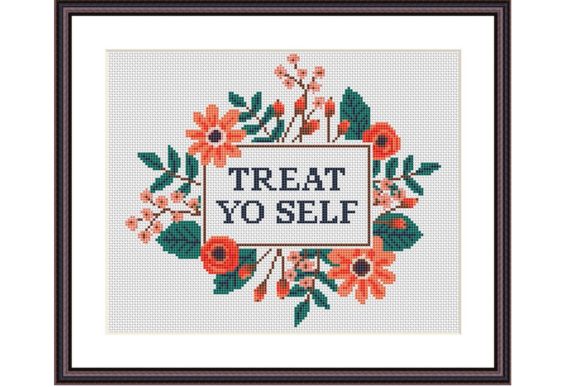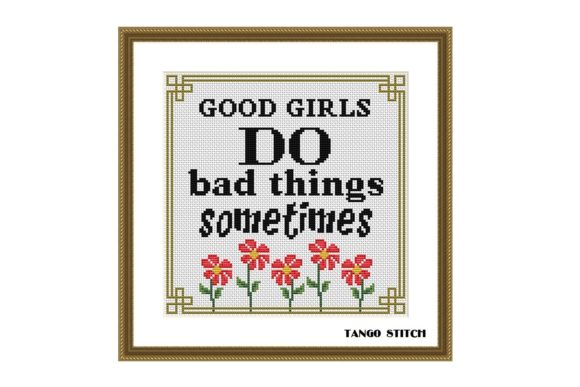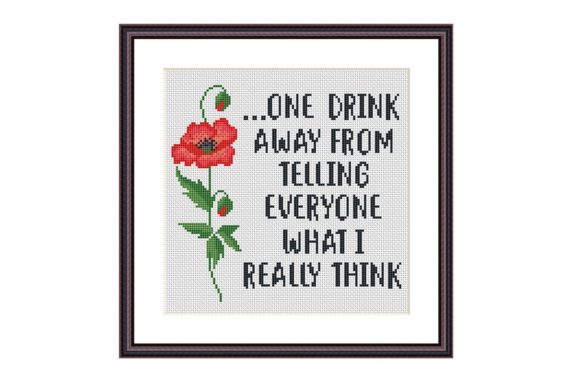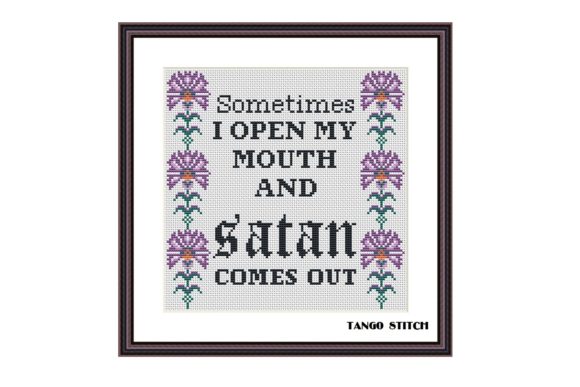
Sometimes Funny Cross Stitch Pattern
A Practical Review for Small Business Merchandise & Branded Patches
As an embroidery designer who’s developed hundreds of commercial patterns for cafés, boutiques, bakeries, florists, pet brands, and creative studios, I approach every new design with two questions: Does it translate well into real-world stitched products? and Will it strengthen — not dilute — a small business’s brand identity? When I first saw the Sometimes Funny Cross Stitch Pattern, its title immediately signaled personality — warm, self-aware, and human. The description — “Sometimes I open my mouth funny” — confirms that tone: friendly, lightly irreverent, and authentically handmade. That’s valuable currency for small businesses competing against polished corporate branding.
First Impression: Handmade Charm with Commercial Flexibility
The Sometimes Funny Cross Stitch Pattern lands as playful yet professional — not childish, not sarcastic, but warmly relatable. Its simplicity (full stitches only) suggests clean lines and strong legibility, which is essential when scaling for embroidered patches or chest logos. Unlike ornate cross stitch patterns that risk visual clutter on apparel, this one reads clearly at glance — a critical advantage for cap embroidery, apron accents, or tote bag designs where customers engage in seconds. It feels modern-classic: rooted in traditional craft but confident enough for a boutique coffee sleeve or a floral shop’s staff uniform.
Real-World Performance Across Business Applications
In practice, the Sometimes Funny Cross Stitch Pattern excels where many hand-drawn graphics falter: consistency across varied substrates and use cases.
- Embroidered patches: Its full-stitch construction avoids fractional stitches or backstitch outlines that complicate digitizing. That means lower stitch density, faster production, and crisp results even on 2"–3" woven or chenille patches.
- Staff uniforms & aprons: As a subtle left-chest accent or pocket detail, it adds brand warmth without overwhelming functional workwear — especially effective on natural fabrics like cotton twill or linen-blend aprons.
- Cap embroidery: Works best on structured front panels (not curved bill edges), provided lettering is sized appropriately. Test readability at 1.75" width before finalizing.
- Tote bag design & product packaging: Scales beautifully as a corner stamp or bottom-hem motif on canvas totes, kraft paper tags, or reusable produce bags — reinforcing handmade product positioning.
- Etsy branding & customer gifts: Perfect for limited-run embroidered gift tags, mini patch kits, or printable mockups shared with buyers to preview how their brand would look stitched.
Where to Use It Thoughtfully
Even strong designs need strategic placement. The Sometimes Funny Cross Stitch Pattern should be used carefully on:
- Very small patches (under 1.5"): Test spacing between letters — tight kerning may blur during stitching, especially with textured thread or low-count fabric.
- Curved surfaces (e.g., cap crowns or rounded mugs): Digitize with gentle curve compensation; avoid stretching the phrase unnaturally.
- Dark uniforms or heavy fabric: Confirm thread color contrast — light ecru or soft grey may disappear on charcoal twill. Opt for high-contrast options like navy-on-cream or charcoal-on-ivory.
- High-wash items (e.g., café aprons, pet bandanas): Recommend tear-away stabilizer + dense fill to prevent fraying over repeated laundering.
Brand Identity Impact: More Than Just Cute
This isn’t just decoration — it’s brand voice made tactile. When a local bakery stitches the Sometimes Funny Cross Stitch Pattern onto staff aprons, it signals approachability and authenticity. Customers don’t just see a logo; they sense a team that doesn’t take itself too seriously — but takes its craft seriously. That builds trust. On tote bags handed to shoppers, it becomes a quiet conversation starter — increasing dwell time and social sharing. For Etsy sellers, pairing it with cohesive design assets (like matching labels or digital embroidery files) creates visual consistency across physical and digital touchpoints, elevating perceived value.
Practical Embroidery Designer Notes
Before committing to production, here’s what I always do with a pattern like the Sometimes Funny Cross Stitch Pattern:
- Print it in black and white at multiple sizes — does the phrase remain legible at 1.25"? If not, adjust spacing digitally before digitizing.
- Check thread color contrast on your target fabric swatch — never rely solely on screen previews.
- Verify spacing between characters — uneven gaps cause awkward pauses in reading flow during wear.
- Confirm hoop size compatibility: Does the widest version fit comfortably in your standard 4×4 or 5×7 hoop? Avoid unnecessary re-hooping on production runs.
- Test stitch on actual fabric — especially if using textured weaves (burlap, duck cloth) or stretch knits.
- Use appropriate stabilizer: Cutaway for knits, tear-away for stable wovens, fusible for lightweight linens.
- Create a printable mockup or digital proof for client approval — show it on a realistic cap or tote render.
- Compare it beside existing design assets — does it complement your logo, typography, and color palette?
- Confirm commercial licensing — since this is listed under Cross Stitch Patterns and Graphics, verify usage rights for resale, branded merchandise, and digital embroidery file distribution.
Bottom line: The Sometimes Funny Cross Stitch Pattern is more than a charming phrase — it’s a versatile, scalable, and emotionally intelligent asset for small business merch. When applied intentionally, it transforms everyday items into memorable brand moments. Whether you’re building custom apparel for a florist, designing embroidered patches for a craft studio, or sourcing digital embroidery files for Etsy sellers, this pattern earns its place in your active design library — not as filler, but as functionally friendly brand language.